SchoolTool
 Blueprint
 TipLine
 ClassLink





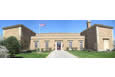





The following is from a 1974 mailer sent to Lyncourt residents, as written by District Clerk Catherine Napolitano:
The History of Lyncourt School
Education has always been a prime concern of Lyncourt residents as witnessed by the efforts they have always made to maintain an excellent school system. Boards of Education down through the years have made every effort to provide quality education for all the youngsters entrusted to their care. In order to do this the building and all facilities need to be maintained and improved from time to time, to meet needed requirements.
To demonstrate how this community has always been forward looking instead of living in the past, I would like to present some information taken from minutes of the Board of Education dating back to the beginning of the century.
The first school in the area was "The Little Brick School" across from Assumption Cemetery. At this time the area was sparsely settled consisting mostly of farmland and a few homes.
However, as the area grew, so did the school system. Another school was built on the corner of Schaeffer Ave. and Court Street around 1918. Both schools were used for a few years and the area continued to grow.
During the late twenties, the Board of Education realized that it would be necessary to build a new school in order to accommodate the increased student population and keep in step.
April 1932, the taxpayers approved the purchase of land to build the school we all know as "Lyncourt."
July of the same year the people approved a referendum to construct a new school consisting of 12 classrooms, auditorium, gymnasium and offices.
The Annual Meeting August 1933 was held in the new auditorium although work on the entire building was not complete.
Both schools were used to take care of the growing population and in April 1934 Superintendent Green and the school principal, Mrs. Doris Allen, discussed subjects to be taught in the District to include the 9th grade. A Junior High departmentalized program was put in operation with the 7th, 8th and 9th grades. The tenth through twelfth grades attended high schools in the City of Syracuse. Transportation to the City schools was furnished to students by issuing street car tokens.
The review of Board minutes through the years consistently demonstrates that the various Board members were truly dedicated people; dedicated to provide the best education for children that the tax dollar could buy. The minutes also demonstrate that the residents were forward looking people who wanted their children to have all the educational opportunities that could be obtained. The review of Board minutes also demonstrates how each year money was put in a category called Operation and Maintenance, part of which was used to keep up the every day repairs to plumbing, heating and some interior and outside decorating and maintenance. The financial reports issued each year show how well this money was spent. Through the years the buildings have been used for many community activities such as Boy and Girl Scouts, Mothers clubs, volunteer organizations, etc. The school was really the "heart" of the community.
Adult Education programs date back to 1935 when they were federally funded. Youth programs were first started in 1948 sponsored by a very active P.T.A.
Discussion by the Board of Education and the State Education department, regarding a full high school program dates back to 1936.
In the late forties the school was again bursting at the seams and the Board had to ask the taxpayers to consider a referendum for an addition to the 1932 building. The community responded favorably to this referendum and plans were started to add the Northeast wing in 1952. Centralization had been discussed early in 1947 but by 1950 the voters decided to remain a Union Free School District because they felt the children would get a better education for their tax dollar in their own community.
By 1964, the student population was crowding the elementary classrooms. Some grades had more than forty students. Due to the lack of land it was a question as to whether the District would be able to receive State Aid for another addition. The residents were informed through many meetings of the various problems and with their cooperation and helpful suggestions a referendum was passed to add seven rooms and another gym area. This is the West side of the present building.
Many educational improvements have been made in the past two or three years and we hear new terms in education such as core curriculum, team teaching, ungraded classes, levels a, b, c, d, etc. Rooms are arranged for the best advantage of the students.
In order that the elementary students have a full day of teaching, a closed lunch program was started two years ago. This eliminated the time lost by riding the bus and at the same time eliminated the cost of noon transportation. Now we need a healthier and more suitable area for a closed lunch program. An additional portable building at the rear of the present school would take care of this and provide an all purpose room for other programs.
The money saved on transportation costs, custodial time, etc., would almost pay for this over a period of time.
Lyncourt school building appears from the outside, to be in good condition. Truthfully much of it is. However, the very "heart" of it, the 1932 section is now forty years old and is in need of major repairs as it is outlined by this brochure. The average home owner knows what this is in his own home and the Board of Education feels that it is their duty to inform the taxpayers and all residents of the needs of the school building...
Education is expensive, but at Lyncourt we turn out a good product as you can see if you look around at the many professional and business people, successful parents and good citizens in the community who received their elementary and junior high education at Lyncourt.
Visit Lyncourt History for more details on the rich history of our school and the surrounding community